
|
impact on TSP
I'm wondering about some pros and cons to the downswing being on the TSP.. including impact. Are there any specific components or accumulator sequences that would be necessary?
not sure where this can go but a little discussion on it might trigger a few questions. thanks |
Quote:
Not mandatory, but recommended. Quote:
|
Quote:
Interesting that Mr. Kelley seemed to be more of an Elbow Plane guy in the earlier editions than the later ones. Pretty significant differences in the release motions of #2 and #3 for the different plane angles . . . in addition you can't discount "dynamic" plane angle shifting thru the ball. |
Quote:
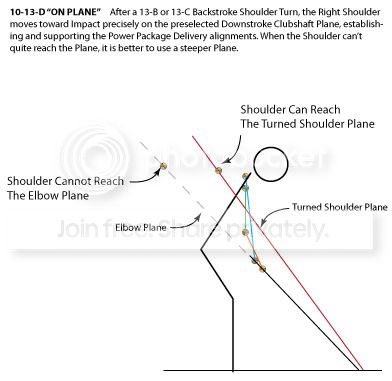
If I understand this correctly, the shoulder turn is a flatter one in which the right shoulder traces the tsp into impact. I'm confused on what is bold. 10-13-B FLAT This is a relatively flat Backstroke Shoulder Turn which places the Shoulder “On Plane” for any Plane Angle with a flatter angle than the Rotated Shoulder Angle. A Flat Down-stroke Shoulder Turn can serve only to impact a circular motion to the Stroke, but almost irresistibly “Off Plane.” 10-13-D ON PLANE After a 13-B or 13-C Backstroke Shoulder Turn, the Right Shoulder moves toward Impact precisely on the preselected Down-stroke Clubshaft Plane, establishing and supporting the Power Package Delivery alignments. When the Shoulder can’t quite reach the Plane, it is better to use a steeper Plane. |
 |
Quote:
I'm assuming that with the shaft on the tsp at impact, #3 will be fairly active. how does #2 become more or less involved? What do you mean by dynamic plane angle shifting? |
Quote:
Actually I'd say the opposite of above . . . TSP (steeper plane) much more #2 dependent . . . where as the flatter planes are more #3 dependent . . . 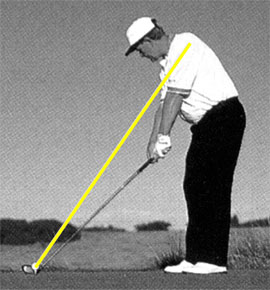 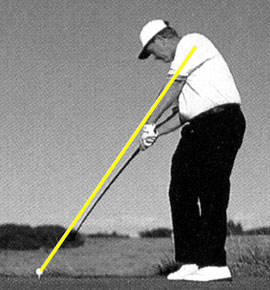 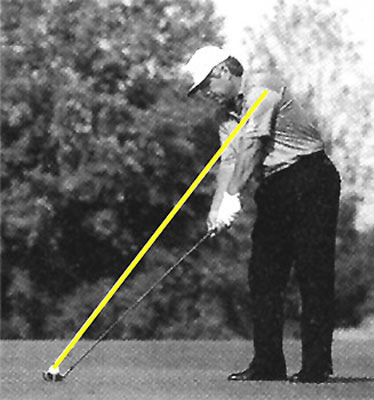  |
Quote:
I think Bucket is correct, as always, the elbow plane procedure includes a lot more #3, possibly why folks like Mr. Gay aren't super long, but perhaps also why Brian is so solid and consistent. My opinion is the TSP with straight line delivery in a hitting procedure is incredibly easy to master. I could be completely wrong... There are lots of great ways to get 'er done, but TSP is what I am loving right now. No disrespect to Mr. Bucket. :notworthy Kevin |
Thanks again Kev,
Why do you think that using more #3 doesn't result in distance? I know what #2 and #3 are but I think I'm confused as to their usage with a tsp straight line delivery. |
Quote:
Kevin |
Quote:
You should read my Book, "1001 Problems with the Elbow Plane". Consider this:
|
Quote:
Oh boy . . . here we go . . . . |
Quote:
|
Bucket Asked: is the downstroke acceleration sequence not dependent upon pivot speed . . . massive rotor?
The Acceleration Sequence is present in non-Pivot Swings as Well as Pivot Swings.
The amount of Lag Pressure required for distance control, in an Alignment Based Swing, determines the Speed of your Pivots Rotation. This is symptomatic with Pivot Controlled Hands Players, to take the shortest club requiring the greatest effort to hit the Ball within 10 feet of your target, when, if anything other than a perfect wing, results in decreased distance. |
Quote:
|
Quote:
Agreed that it is easier to master (a left hand karate chop to plane, focused on #2). In a nutshell, TSP is less powerful, but more accurate. Kev - a flat downstroke turn creates too much 'out', and makes it difficult to stay on plane. |
Quote:
Ed . . . why do you think there is more accuracy inherent in the TSP? Not sure I'm ready to buy in . . . interested to hear your rationale. |
Quote:
Hey, can I get in on this party? In regard to 10-13-B FLAT. I believe your bolded "almost always irresistibly Off Plane" is the Startdown's equivalent to the pure Shoulder Turn Takeaway in Startup and the basic problem there in. Namely, the shoulders are not (given a Flat Shoulder Turn in startdown) traveling on the Inclined Plane and therefore are likely to take the Hands or Power Package with them on their off plane meanderings. Pivot Chain and Sequencing etc demand that the Shoulders and not the Arms provide the initial movement in Startdown for Total Motion shots and so its best to align the Shoulders to the Inclined Plane in Startdown. 10-13-D On Plane. (In Startdown) All of this suggests that the shoulders dont ideally merely turn on the same plane back and down. Flat Back gets the Right Shoulder closer to Shaft Plane relatively speaking (compared to Rotated which would have a higher associated TSP angle) and then On Plane going down. Luke described this to me as the right shoulder painting a reverse "7" on the back wall of his hitting station. Notice how the top of the seven is flat and then a diagonal towards the ball. This portrays a TSP which is on the Shaft Plane I guess. Straight Line Delivery Path which requires Hip Action. So the 10-13-B Flat going back lowers the Right Shoulder some and then given a Slide Hip Turn, Axis Tilt in transition (or before, see Hogan) the Right Shoulder is further lowered to a Turned Shoulder Plane that more closely approaches the Shaft Plane for it move 10-13-D On Plane. If this TSP actually matches the shaft plane, then no further plane angle shifting is required, if it only approaches the shaft plane then a shift or shifts (the more shifts the more you approach Circle Path) will be required. But its less of a shift than if you didnt use Axis Tilt. At least that is what I make of 10-13-D's "better to use a steeper plane". If Im correct, which remains to be seen, it should probably read something like "When the Shoulder cant quite reach the Shaft Plane, its still better to use this TSP plane angle than a higher one". You know when you try to rewrite Homer you quickly understand his preference for brevity. Consider the previous paragraph a Wiki guys. |
1 Attachment(s)
Quote:
10-13-A STANDARD This is dual application of the Flat (-B below) Backstroke and On Plane (-D below) Down-stroke Shoulder Turn. In my opinion, the flat backstroke shoulder turn is wonderfully compatible with the MacDonald drills. Kevin |
Quote:
Kevin |
Quote:
I'll repeat that for 12 Pc. Bucket. One situation when ones Right Shoulder cannot reach the Plane, is when swinging on the ELBOW PLANE. I think that Homer was speaking directly to Bucket and descendants of Ben Hogan. Use a Steeper Plane. Doing so will give your stroke Right Shoulder support for the Power Package and eliminate the need for a hazardous Plane Shift. Quote:
|
Sorry that I am not quite understand.
Quote: - If the right shoulder cannot reach this plane. - one situation is swinging on the elbow plane. If you choose the elbow plane, then can the downstroke clubshaft plan be the elbow plane? Therefore the right shoulder no need to redirect to the TSP? Also if swing back based on elbow plane then at the top should the right shoulder not on the TSP? Can a hitter hit on both plane, directly straight down? |
Quote:
At address and through the ball for structural (RFFW) and tracing (the straight plane line) reasons the Right Forarm is ideally on the same plane as the clubshaft's lie angle. The Right Forearm is said to be on this plane when the Right Elbow is on this plane. This is the Elbow Plane one employs through Impact. To accomplish this and a Level Left Wrist, adjustments must be made to your Head position, knee bend, waist bend, distance from the ball etc. These adjustments, if not done at Impact Fix will necessitate an identical adjustment dynamically when you are swinging......not the best thing for your consistency. This is a major cause of faulty Impact Alignments. The Turned Shoulder Plane (TSP) is a line drawn from the Plane Line through the Right Shoulder when it's "turned" to its position at Top. This Plane Angle is dependent on many things including the type of Shoulder Turn employed. Generally the Flatter the Shoulder Turn going back the closer this Plane Angle is to the Shaft Plane or Elbow Plane. The Turned Shoulder Plane allows the Right Shoulder to take the Power Package down the TSP towards the Plane Line in Startdown. An On Plane move of the Power Package via the Right Shoulder referred to as an On Plane Shoulder Turn. Flat back and On Plane coming down. The shoulders dont turn on a single plane for the Standard Shoulder Turn anyways. However the TSP is not the same Plane Angle as the Elbow Plane and so the Plane Angle of the Inclined Plane must shift to this lower Elbow Plane angle prior to Impact. This is achieved as easily as it was to shift to higher Plane Angle in the Backstroke if you Addressed the ball with a Level Left Wrist at Fix. It just sort of happens as the Right Elbow unbends, the reverse situation of Right Forearm Pickup. If you Pickup you must let it down, CF helps out in this regard. The reference in 10-6-B to "any Plane Shift being hazardous" relates to a selection of an Inclined Plane Angle other than a TSP angle at Top which would necessitate a shift back to a TSP angle prior to an On Plane Shoulder Turn in Startdown. Logic holds that any plane shift is hazardous yes but some shifting does happen. Keeping it to a minimum is what its all about while using your Right Shoulder to take the Power Package down plane as the initial move in Startdown. For this to happen you have to employ a TSP angle. The closer to the Elbow Plane angle the better. |
 |
How do I know if the Rt shoulder is on the right plane in the downswing?
|
Quote:
This is what Happens when your Right Shoulder, Clubshaft and Hands are on the same plane at Start down. Without pulling the club with your arms, i.e. the club being pulled down by the Hip-Slide-Pivot, your Right Elbow will Forcibly move Down Plane. Your Right Elbow will feel like its DRIVEN down-Plane. When you first accomplish this, your Right Elbow may Slam into your Ribcage. Once you do that a few times, and adjust for Plane Line Tracing, your Elbow will be Driven to its Release Location with-out effort. |
Quote:
Yup, except the Right Elbow is not on the Shaft Plane and therefor neither is the Right Forearm. So no Right Forearm Flying Wedge structure there and since the Right Forearm is not pointing at the Base Line/Plane Line, the ability to Trace the Plane Line is severely handicapped. |
Quote:
I see exactly wat you are saying. However, I think it's kind of like studying the pictures of Diane in the book. Look only at the point Mr. Kelly, or Daryl in this case, is trying to make without paying attention to positions that are not relevant to the point... That being said, I'll bet Daryl could incorporate what you are saying into a new pic? I appreciate your work Daryl! :salut: Kevin |
Quote:
Hey Jerry Basically assuming you are employing a TSP, the Right Shoulders so called "right" Plane Angle will be the one that most closely approaches the Elbow Plane, assuming you have an Elbow Plane to get to. Let me explain, all Alignments are derived from Impact Alignments! So to answer your question properly I must go back to Fix. You must adjust you machine at Impact Fix properly!!!!!!!!!!!!!!!! So many of us TGM'rs dont do this and we MUST. Get the Right Arm on Plane with the desired amount of shaft lean and clubface angle for the shot at hand. Then get the Left Wrist on the club and Level. This will require some adjustment to Knee Bend, Waist Bend, Head Position etc. These are the key Machine Adjustments that if not done at Fix or done dynamically during the motion will destroy your Impact Alignments!!!!!! Far better to do them at Fix than dynamically. From there you have choices in regard to which TSP angle you are using assuming you are even using a TSP. But as I mentioned above Homers definition of a "Standard" Shoulder Turn is Flat going back and On Plane going down. But all of the TSP angles are On Plane by definition. Some are higher than others. Homer preferred an Angle that more closely approached the Elbow Plane or Shaft Plane. I know the wording makes it all so confusing. Basically, ideally, get your Machine adjusted properly at Fix, then take your Right Shoulder back as Flat to the ground as is comfortable. If you get your Pressure Points on this same Plane Angle you are on a TSP! A Flat one at that. You are now all systems go to use your Right Shoulder to take the Pressure Points and the Power Package down this TSP angle which you have pre selected. Axis Tilt via Hip Action prior to Startdown will further tilt the Right Shoulder to a Plane Angle lower than your Flat back Shoulder Turn took it to. This gets you even closer to the Elbow Plane. That is the ideal if there is one. Although Homer would never talk in such terms there being so many usable patterns. Most every golfer comes in on a Higher Plane, especially the over the top types who Startdown with their Arms instead of their Right Shoulder and cross line it, outside to in. The Pivot has to lead in Startdown but it tends to get in the way of the Right Elbow and redirect the Power Package OUT and over the Plane. Homers genius allowed him to identify this problem and its solution. Research Cleared Right Hip and Axis Tilt in connection with the topic at hand, the TSP and TGM opens up like the readable book it often isnt. This is what I see in Yoda's swing, Hogan's swing. |
Quote:
And then that isnt Diane or Hogan or Brian Gay then at Address or at Impact either and all Alignments are derived from Impact Alignments after all. The RFFW and the On Plane Right Elbow being Impact Alignments make them relevant to the discussion of any Alignment! No? |
Quote:
I believe in the right forearm being on plane and it's magic 100%! No offense my friend.:salut: Kevin |
Quote:
The problem is with the Book, not my analysis. The Book depicts the Elbow Plane as a Plane the Elbow Traces, not the Hands. That alone makes this Plane different and odd in comparison to any other Plane Angle Variation in the Book. In other words, the Elbow rests on the Plane Throughout the Stroke. The Hands and Clubshaft are raised above this plane during the Backstroke and must be Lowered to the Plane during the Downstroke. This is not a Rigid Power Package Stroke as outline and discussed in Chapter 6. So, if one is using the Elbow Plane, one must bend the Right Elbow to Raise the Club during the Backstroke and Unbend the Right Elbow during the Downstroke. It results in a CONCAVE Plane (ala-Ben Doyle). It's not Anti-Golfing Machine if one merely regards TGM as an explanation of the Golf Swing. But the Nature of this "Flexible" Power Package is not compatible with The Magic of the Right Forearm, Extensor Action, etc, etc. Any explanation of Hogans Stroke as far as concerns TGM, should include this kind of Elbow-Plane - Power Package analysis. Sooooo, needless to say, an Elbow Plane swing is Pivot Controlled Hands and the #3 PP cannot trace the Plane-line. Body Angles must be adjusted for Clubhead - Ball intersection. ANYONE-EVERYONE who bends and unbends the Right Elbow from Start-up to Release will be Swinging on the Elbow Plane. |
Quote:
Obviously, you mis-perceive this matter. You've been hanging with the Bucket too long and the grease has finally gone to your brain. Allow my Vapid response to help clear things up. First and Foremost is your misconception about the TSP. It's not a fixed Plane. Its angle varies by Club Length. The Shorter the Club Length, the Steeper the Angle. OB1: "OK daryl you jerk, then if the TSP angle is different for each club, then what does a Flat Shoulder turn mean?" Daryl: It simply means any angle flatter than a Rotated shoulder turn. OB1: "OK daryl, smarty pants, then how does one know how flat to turn your shoulders for any specific club length?" Daryl: Each Clubs Length changes the angle of the Right Forearm at Address. Then, using Extensor Action Takeaway, your Right Shoulder will be directed to the appropriate height and Location per that angle (Magic of the Right Forearm). Longer Clubs will result in a "Lower Right Shoulder" and Shorter Clubs will raise the Right Shoulder Higher. So, given a short enough shaft, its possible for a Properly applied Flat Backstroke Shoulder Turn to direct the Right Shoulder to the Same Location as a Rotated Shoulder Turn. But it's still called a TSP if it arrive On Plane by Geometrically aligned forces and not a simple 90 degree shoulder-spine rotation. Isn't it obvious to everyone that while using the Elbow Plane, that one cannot have an On-Plane Downstroke Shoulder Turn? EVER. Someone let 'Bucket' know. |
Quote:
Is there more mechanical advantage to having your right shoulder on plane or having the right forearm moving at right angles to the axis of rotation? Pick one and tell me why . . . I'm not quite sure I ever said that the right shoulder could be on plane with the elbow plane . . . however . . . . you have yet to put up anybody that is a living breathing human being that stays on the TSP . . . I await your submission. L8RT8Rnutz. |
Quote:
There is More Mechanical Advantage with a Properly executed Downstroke Acceleration Sequence which requires an On-Plane Right Shoulder than there is with solely the Right Forearm moving at Right Angles to its Center of Rotation. The first, is an accelerating Force. The second, a force you describe, a simple Lever Extension of the Rotating Body, is really great for "Dork Does Ping-Pong". Truly, Dingdong Here is one Human being. Square Shoulder Plane, Flat Backstroke and On-Plane Square Shoulder Plane Downstroke Through Impact to Follow through. This is proof that a Human can Swing on the much steeper Square Shoulder Plane. Then, is it really hard to believe that one can Swing as easily on a TSP? Also, look at the Bend in his Right Arm. 90 degrees at the Top, Halfway down and Impact. This is proof of the Rigid Power Package and Downstroke Acceleration Sequence. 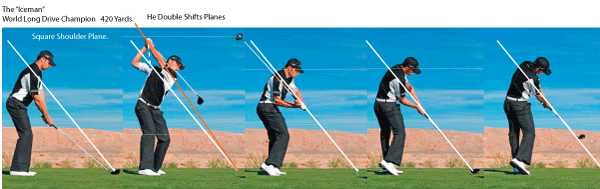 |
Quote:
You know, Rigid Power Package Dude and 90 degrees to the axis of Rotation Man. |
Quote:
All of this TSP stuff is really a fine tuning thing. Most of us are not on plane to begin with or if we are, not on a TSP at Top. The TSP concept is all about the Right Shoulder taking the Power Package down the Inclined Plane Angle in Startdown (that is whatever Plane Angle the Right Shoulder is Aligned to and assuming that the Pressure Points are on this same plane). Words fail us when attempting to describe geometry. Maybe one of the biggest problems with Homers writings. |
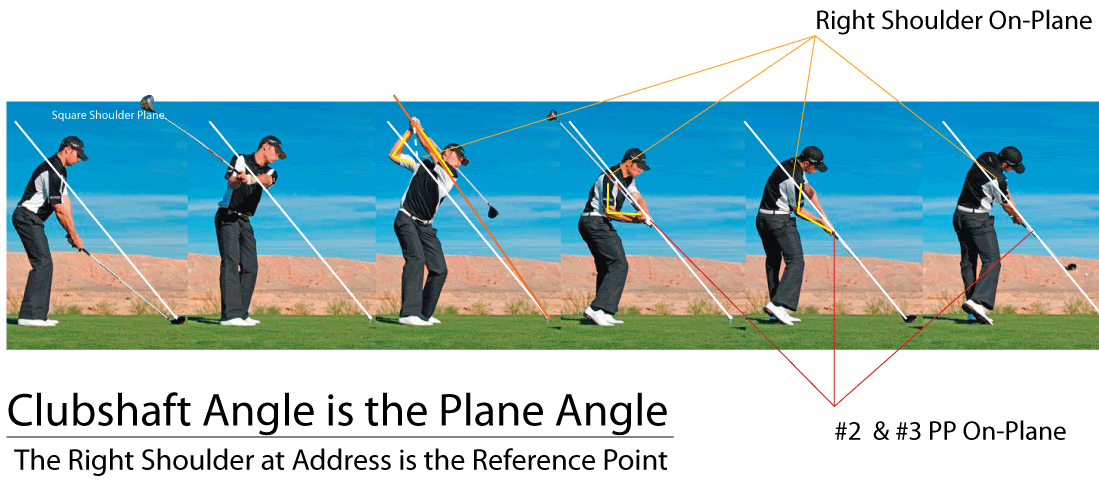 His Power Package is Rigid = He doesn't Change the Bend In his right Arm during the Downstroke. Don't over-bend the Arm during the Backstroke. Keep the left arm about 45 degrees off the chest will help. His clubshaft is on a Square Shoulder Plane. The #2 & #3 PP are ON Plane His Right Shoulder is On Plane. Why is his Right Shoulder On Plane and his Power Package Rigid? Because as his Pivot forces the Right Shoulder Down-Plane On Plane, his hands will be moved On Plane Down-Plane. This occurs because the Power Package is able to drop from the shoulder sockets and doesn't rely on unbending the right arm (a move that throws the Hands off-plane). Pre-Impact Photo: Notice also that His Right Forearm Flying Wedge is On-Plane. On the Plane of the Right Wrist Bend at 90 degrees to the Left Arm Wedge. Quote:
So?? What is learned in this Photo Sequence and TGM?
Performing the above will keep all Power Package Components On Plane driven by the PIVOT via the Right Shoulder. THE GREAT ILLUSION: The Arms don't travel down carrying the Hands with them. The Power Package Lowers as a result of the Hands being Forced Down-plane. Geometric Golf. Geometrically Oriented Linear Force. Don't try to create a force using upper body muscle power. Force dictating alignments (rubbish). Rather, use alignments that will bring about an acceleration sequence. Dear O.B. and Bucket, It cannot be this way with the Elbow Plane. |
Quote:
I have been taking the "plane shifts are hazardous" argument literally. I guess when I look at my model swing, Brian, I see here is a plane shift, if only a small one. Kevin |
D, I like those drawings, lots of effort there. Thanks. Couple of thoughts
-"Rigid Power Package" or Rigid Right Elbow angle . Arent you really talking about a Delayed Release in Accumulator #1? You've got to Release it at some point prior to Impact. You cant hang on all the way to Impact, Steering , fore right! The latest Release Point being Automatic Snap Release. -In regard to your fixed white Plane Line. I wish the 1-L-18 animation would resurface. We lost it during the change over to the new site format. Basically the white line in your drawings never shifts its Plane Angle. Despite the fact that Jason clearly shifts his Plane Angle. To get your drawing into a TGM way of looking at Plane Shifts you must start in the first frame with the white line running along Jason's Shaft Plane. He is not using an Elbow Plane there anyways. The next frame would show him to be slightly off plane with the white line pointing outside the Base Line , Plane Line. Etc etc. You could align your white line to the Sweetspot plane too for further relevance but the shaft is a reasonable approximation of the Plane that his force is traveling. All of this would show a Plane that shifts Angles UP then Down with some off plane meanderings. I agree though he does get back onto the TSP in Downstroke and does appear to stay on it late into Release or Impact even. Interesting. If he set his Right Arm on Plane at Address his Plane Angle changes would be lessened. I hope we can dig out the 1-L-18 animation. |
| All times are GMT -4. The time now is 04:18 AM. |