If I understand this correctly, the shoulder turn is a flatter one in which the right shoulder traces the tsp into impact.
I'm confused on what is bold.
10-13-B FLAT
This is a relatively flat Backstroke Shoulder Turn which places the Shoulder “On Plane” for any Plane Angle with a flatter angle than the Rotated Shoulder Angle. A Flat Down-stroke Shoulder Turn can serve only to impact a circular motion to the Stroke, but almost irresistibly “Off Plane.”
10-13-D ON PLANE
After a 13-B or 13-C Backstroke Shoulder Turn, the Right Shoulder moves toward Impact precisely on the preselected Down-stroke Clubshaft Plane, establishing and supporting the Power Package Delivery alignments. When the Shoulder can’t quite reach the Plane, it is better to use a steeper Plane.
Hey, can I get in on this party?
In regard to 10-13-B FLAT. I believe your bolded "almost always irresistibly Off Plane" is the Startdown's equivalent to the pure Shoulder Turn Takeaway in Startup and the basic problem there in. Namely, the shoulders are not (given a Flat Shoulder Turn in startdown) traveling on the Inclined Plane and therefore are likely to take the Hands or Power Package with them on their off plane meanderings.
Pivot Chain and Sequencing etc demand that the Shoulders and not the Arms provide the initial movement in Startdown for Total Motion shots and so its best to align the Shoulders to the Inclined Plane in Startdown. 10-13-D On Plane. (In Startdown)
All of this suggests that the shoulders dont ideally merely turn on the same plane back and down. Flat Back gets the Right Shoulder closer to Shaft Plane relatively speaking (compared to Rotated which would have a higher associated TSP angle) and then On Plane going down. Luke described this to me as the right shoulder painting a reverse "7" on the back wall of his hitting station. Notice how the top of the seven is flat and then a diagonal towards the ball. This portrays a TSP which is on the Shaft Plane I guess. Straight Line Delivery Path which requires Hip Action.
So the 10-13-B Flat going back lowers the Right Shoulder some and then given a Slide Hip Turn, Axis Tilt in transition (or before, see Hogan) the Right Shoulder is further lowered to a Turned Shoulder Plane that more closely approaches the Shaft Plane for it move 10-13-D On Plane. If this TSP actually matches the shaft plane, then no further plane angle shifting is required, if it only approaches the shaft plane then a shift or shifts (the more shifts the more you approach Circle Path) will be required. But its less of a shift than if you didnt use Axis Tilt.
At least that is what I make of 10-13-D's "better to use a steeper plane". If Im correct, which remains to be seen, it should probably read something like "When the Shoulder cant quite reach the Shaft Plane, its still better to use this TSP plane angle than a higher one".
You know when you try to rewrite Homer you quickly understand his preference for brevity. Consider the previous paragraph a Wiki guys.
In regard to 10-13-B FLAT. I believe your bolded "almost always irresistibly Off Plane" is the Startdown's equivalent to the pure Shoulder Turn Takeaway in Startup and the basic problem there in. Namely, the shoulders are not (given a Flat Shoulder Turn in startdown) traveling on the Inclined Plane and therefore are likely to take the Hands or Power Package with them on their off plane meanderings.
Pivot Chain and Sequencing etc demand that the Shoulders and not the Arms provide the initial movement in Startdown for Total Motion shots and so its best to align the Shoulders to the Inclined Plane in Startdown. 10-13-D On Plane. (In Startdown)
All of this suggests that the shoulders dont ideally merely turn on the same plane back and down. Flat Back gets the Right Shoulder closer to Shaft Plane relatively speaking (compared to Rotated which would have a higher associated TSP angle) and then On Plane going down. Luke described this to me as the right shoulder painting a reverse "7" on the back wall of his hitting station. Notice how the top of the seven is flat and then a diagonal towards the ball. This portrays a TSP which is on the Shaft Plane I guess. Straight Line Delivery Path which requires Hip Action.
So the 10-13-B Flat going back lowers the Right Shoulder some and then given a Slide Hip Turn, Axis Tilt in transition (or before, see Hogan) the Right Shoulder is further lowered to a Turned Shoulder Plane that more closely approaches the Shaft Plane for it move 10-13-D On Plane. If this TSP actually matches the shaft plane, then no further plane angle shifting is required, if it only approaches the shaft plane then a shift or shifts (the more shifts the more you approach Circle Path) will be required. But its less of a shift than if you didnt use Axis Tilt.
At least that is what I make of 10-13-D's "better to use a steeper plane". If Im correct, which remains to be seen, it should probably read something like "When the Shoulder cant quite reach the Shaft Plane, its still better to use this TSP plane angle than a higher one".
You know when you try to rewrite Homer you quickly understand his preference for brevity. Consider this last paragraph a Wiki guys.
Some wonderful G.O.L.F. in that post. Thanks OB!
Kevin
__________________
I could be wrong. I have been before, and will be again.
10-13-D “ON PLANE” After a 13-B or 13-C Backstroke Shoulder Turn, the Right Shoulder moves toward Impact precisely on the preselected Downstroke Clubshaft Plane, establishing and supporting the Power Package Delivery alignments. When the Shoulder can’t quite reach the Plane, it is better to use a steeper Plane.
One situation when ones Right Shoulder cannot reach the Plane, is when swinging on the ELBOW PLANE.
I'll repeat that for 12 Pc. Bucket.
One situation when ones Right Shoulder cannot reach the Plane, is when swinging on the ELBOW PLANE.
I think that Homer was speaking directly to Bucket and descendants of Ben Hogan. Use a Steeper Plane. Doing so will give your stroke Right Shoulder support for the Power Package and eliminate the need for a hazardous Plane Shift.
Quote:
10-6-B TURNED SHOULDER This reference point is primarily the point reached by the Right Shoulder after a Flat Backstroke Shoulder Turn. But any other controlled Shoulder Turn can also provide an acceptable reference point. See 10-13-0. This Plane Angle has far better performance characteristics than any other because any Plane Angle Shift is very hazardous. This procedure does not refer to the disruptive Shoulder Turn Takeaway – which is always too “Flat” and/or too “Low” making a Plane Angle Shift mandatory and usually unintentional and unsuspected. Study 7-3 and 10-24-F.
I'm wondering about some pros and cons to the downswing being on the TSP.. including impact. Are there any specific components or accumulator sequences that would be necessary?
not sure where this can go but a little discussion on it might trigger a few questions. thanks
Got any pictures?
Interesting that Mr. Kelley seemed to be more of an Elbow Plane guy in the earlier editions than the later ones.
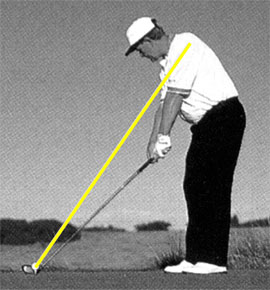
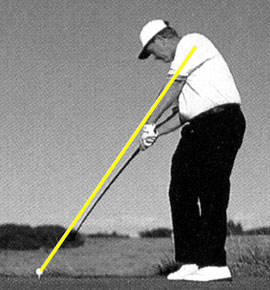
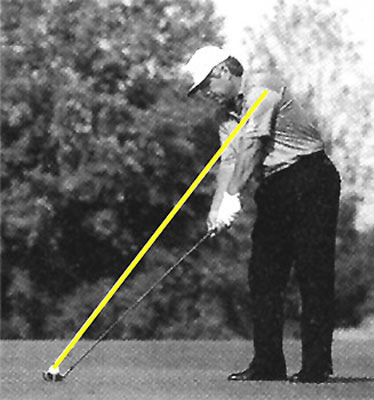
Pretty significant differences in the release motions of #2 and #3 for the different plane angles . . . in addition you can't discount "dynamic" plane angle shifting thru the ball.
Interesting that Mr. Kelley seemed to be more of an Elbow Plane guy in the earlier editions than the later ones.
Pretty significant differences in the release motions of #2 and #3 for the different plane angles . . . in addition you can't discount "dynamic" plane angle shifting thru the ball.
Thanks Bucket,
I'm assuming that with the shaft on the tsp at impact, #3 will be fairly active. how does #2 become more or less involved?




 Hybrid Mode

